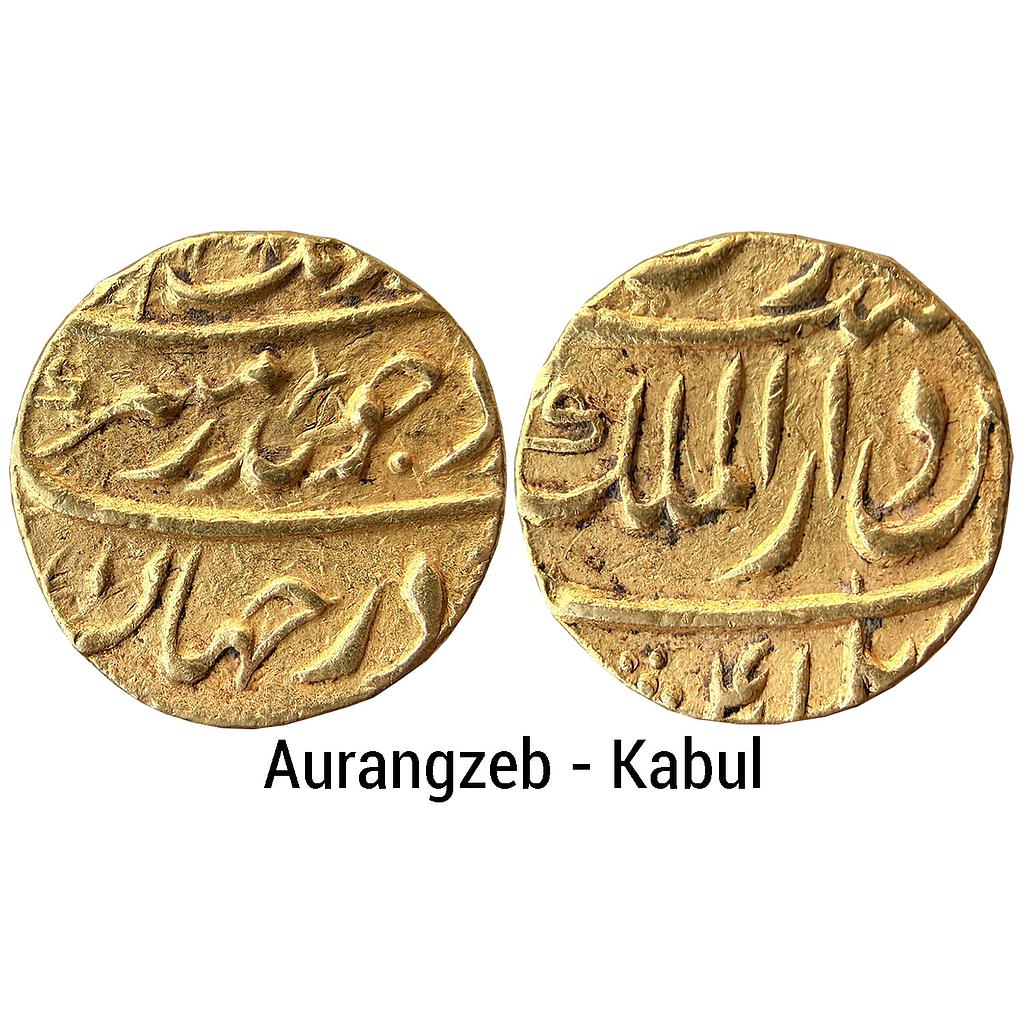
Lot 141
Mughal Aurangzeb Dar ul-Mulk Kabul Mint Gold Mohur
Auction # 30 Lucknow (Online)
- Estimated Price (INR)
- 175000 - 180000
-
Bidding Will Start Soon!
- Catalog Reference #
- similar to Zeno # 158360, KM # 315.25
- Metal Composition
- Gold
- Lot Grade/Condition
- very fine
- Diameter
- 19.82 mm
- Weight
- 11.04 gms
- Denomination
- Mohur
- Calendar/Year
- AH 1068-1118, 1658-1707 AD
Mughal, Aurangzeb (AH 1068-1118, 1658-1707 AD), Gold Mohur, 11.04 gms, 19.82 mm, Dar ul-Mulk Kabul Mint, AH 1112, RY 4(5), "Badr Munir" Couplet, The obverse bears Aurangzeb’s celebrated silver couplet, “Sikka zad dar jahan chu Badr Munir, Shah Aurangzeb Alamgir”—“Shah Aurangzeb Alamgir struck coin in the world like the radiant full moon.” Here, Badr or “full moon” symbolized the brilliance of silver, contrasting with Mihr Munir, the “radiant sun” couplet associated with gold coins. The reverse records “Sana 41 Julus” and “Zarb Kabul,” with the distinguished mint epithet Dar-ul-Mulk (“Seat of the Kingdom”). , AH 1112 (c. 1700–1701 AD) represents an important phase of Mughal authority in Kabul, the empire’s principal north-western frontier province and gateway to Central Asia, Persia and the Indian subcontinent. Following Amir Khan’s death in 1698 AD, Aurangzeb appointed his son Prince Muhammad Mu‘azzam—later Emperor Bahadur Shah I—as governor of Kabul. Mu‘azzam maintained a substantial army, guarded the Khyber Pass, monitored the Safavid frontier and preserved the caravan routes through a combination of military strength and negotiated subsidies to the surrounding Afghan tribes. Kabul was also a major commercial centre through which horses, precious metals and dry fruits entered India, while Indian textiles, sugar and spices travelled towards Persia and Central Asia. This coin therefore represents Aurangzeb’s sovereignty, monetary administration and strategic influence over Kabul shortly before Mu‘azzam succeeded him as Bahadur Shah I in 1707 AD, similar to Zeno # 158360, KM # 315.25, very fine, very rare.