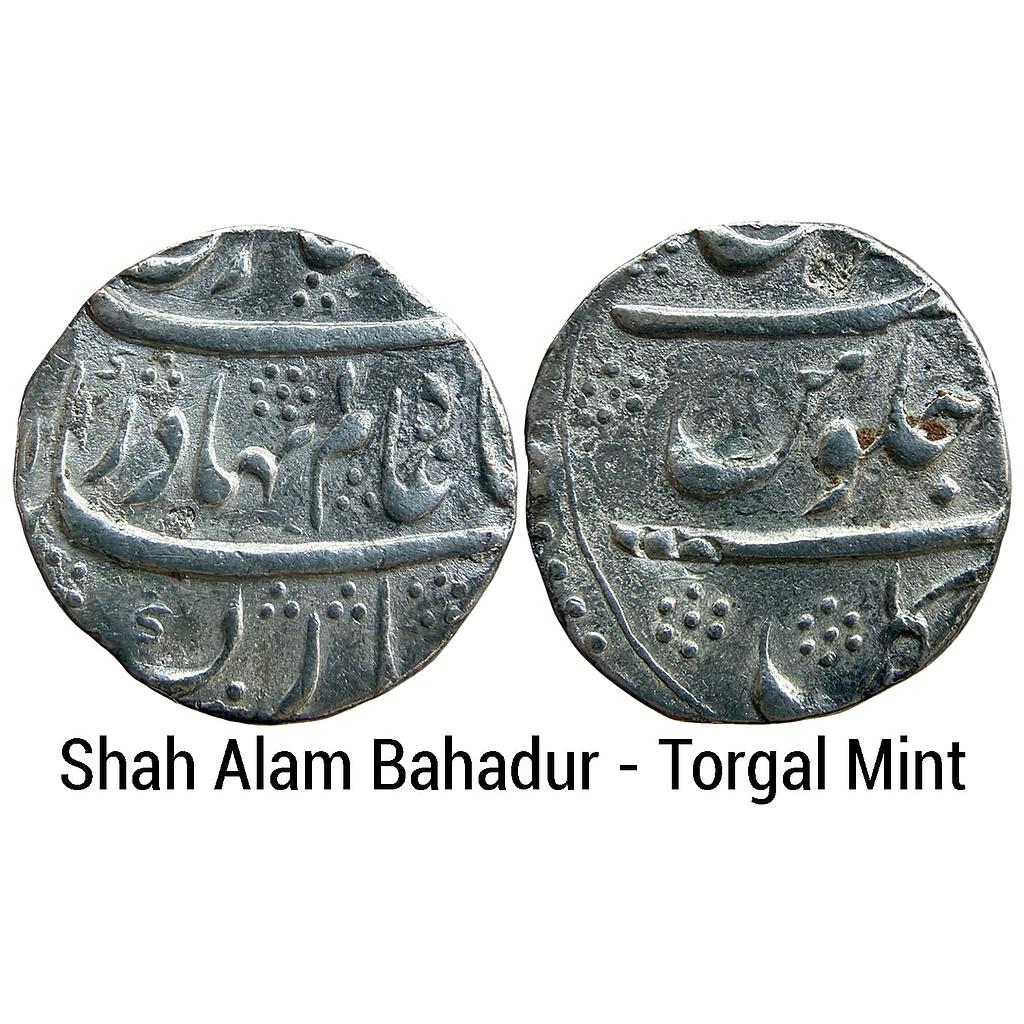
Lot 214
Mughal Shah Alam Bahadur Torgal Mint Silver Rupee
Auction # 29 Lucknow (Online)
- Estimated Price (INR)
- 25000 - 30000
-
Bidding Will Start Soon!
- Catalog Reference #
- KM # 348.35
- Metal Composition
- Silver
- Lot Grade/Condition
- very fine
- Diameter
- 21.38 mm
- Weight
- 11.14 gms
- Denomination
- Rupee
- Calendar/Year
- AH 1119-1124, 1707–1712 AD
Mughal, Shah Alam Bahadur (AH 1119-1124, 1707–1712 AD), Silver Rupee, 11.14 gms, 21.38 mm, Torgal Mint (mostly visible at bottom on rev), AH (112)1, KM # 348.35, very fine, rare.
After 1657 AD, the Mughal Empire steadily absorbed the territories of Bijapur, and before its final fall in 1686 AD, several important mints operated across the Deccan. Through diplomacy and political influence rather than prolonged warfare, Prince Muazzam — later Emperor Shah Alam Bahadur — successfully brought Bijapur under Mughal suzerainty. In March 1680 AD, the Khutbah was read at Bijapur in the name of Emperor Aurangzeb, and gold and silver coinage began to be struck in the Mughal emperor’s name, marking one of Shah Alam Bahadur’s greatest political achievements in the Deccan.
Among the important Deccan mint towns, Torgal emerged as a prominent Mughal military and administrative centre. Located in present-day Ramdurg Taluk of the Belagavi (Belgaum) district in Karnataka, Torgal was an important provincial headquarters and mint town during the late medieval and Mughal periods. The town and its massive historic fortress, situated along the banks of the Malaprabha River, occupied a strategic position on key frontier routes linking Bijapur, Dharwar, and the Carnatic region. Torgal gained increasing prominence during the Mughal campaigns against the Adil Shahi kingdom, the reorganization of the Deccan into the Subah of Dar-uz-Zafar Bijapur, and the subsequent war of succession following Aurangzeb’s death. Its mint symbolized the extension of Mughal political and monetary authority deep into the Deccan under Shah Alam Bahadur.
Following the victory of Shah Alam Bahadur over his brothers Azam Shah and Kam Bakhsh, the Deccan — including Torgal and its mint — firmly came under imperial Mughal control, with coinage continuing to be issued in the Mughal emperor’s name from the important regional mints.