Lot 313
Mughal Aurangzeb Dar al-Sultanat Lahore Mint Silver Rupee
Auction # 28 Lucknow (Online)
- Estimated Price (INR)
- 10000 - 12000
- Price Realised -
-
Auction Completed!
- Catalog Reference #
- similar to Zeno # 177324
- Metal Composition
- Silver
- Lot Grade/Condition
- extremely fine
- Diameter
- 21.89 mm
- Weight
- 11.31 gms
- Denomination
- Rupee
- Calendar/Year
- AH 1068-1118, 1658-1707 AD
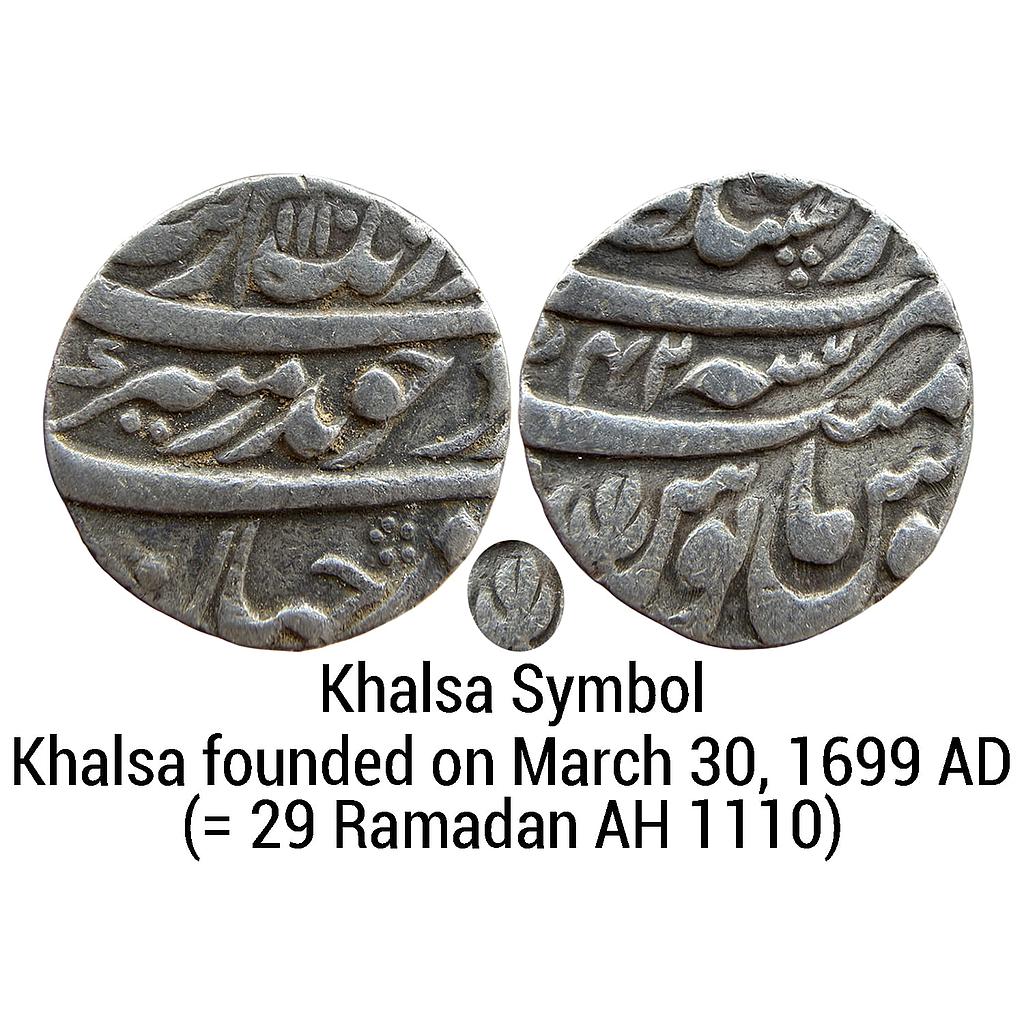
Mughal, Aurangzeb (AH 1068-1118, 1658-1707 AD), Silver Rupee, 11.31 gms, 21.89 mm, Dar al-Sultanat Lahore Mint (partially visible at top on rev), and dated AH 1110 (AD 1698–99), RY 42, 'Badar-e-munir' Couplet, combines standard imperial design with an unusual Sikh element. It bears Aurangzeb’s name, regnal year (42), and the mint title “Dar al-Sultanat.” Its distinctive feature is the inclusion of the khanda—the Sikh emblem of a double-edged sword within a chakram and flanked by two swords—subtly placed within the inscription at 7'O clock on the reverse, This issue is extremely rare and appears limited to this single year. It was minted during a period of intense conflict in Punjab between the Mughal Empire and Guru Gobind Singh, the 10th Sikh Guru, who founded the "Khalsa" on March 30, 1699 AD (= 29 Ramadan AH 1110). The appearance of the khanda on an official Mughal coin, prior to any Sikh state authority, is highly unusual and not fully understood. It likely reflects a local and possibly unofficial arrangement between Sikh groups in Lahore and mint officials. The coin thus represents a unique and historically significant overlap of Mughal authority and emerging Sikh identity, KM # 300.53 var, Saran Singh, “The First Coins of the Sikhs,” ONS Newsletter 144 (Spring 1995), p. 8 (for a later Mughal issue with the symbol), similar to Zeno # 177324, extremely fine, very rare.
Alternative Opinion on the Symbol:
However, an alternative scholarly opinion argues that the motif is more likely a decorative Mughal mint symbol rather than a specifically Sikh emblem. Research published by Jeevandeep singh notes that similar motifs appear across multiple Mughal issues of different emperors and mints over an extended period, suggesting that the device was part of the broader Mughal ornamental repertoire. The study further argues that the modern composite Khanda emblem is a comparatively recent formalized symbol, making retrospective identification on Mughal coinage uncertain. According to this interpretation, the mark should be viewed cautiously and may represent a numismatic misreading rather than definitive evidence of Sikh political influence on Mughal minting.
Statutory Note:
The attribution and interpretation of the symbol appearing on this coin remain subjects of ongoing numismatic debate and scholarly opinion. Multiple viewpoints exist regarding the nature and significance of the mark, including interpretations identifying it as a Sikh Khanda-related symbol as well as alternative opinions considering it a Mughal ornamental (flame lily symbol) or mint device.
Prospective bidders are strongly advised to study the coin carefully, review all referenced opinions and published material independently, and rely upon their own judgment and expertise before placing bids. The description provided reflects currently available research and opinions but does not constitute a definitive guarantee of attribution or interpretation.
This lot is offered strictly “as is,” and all sales are final. No returns, refunds, cancellations, or disputes will be entertained on the basis of differing scholarly or collector opinions regarding the symbol, attribution, or historical interpretation of this coin.
Correction made on 26-May-2026, 12:33 Pm, Courtesy : Jeevandeep Singh & Gurinder Singh.